 Arashiyama Bamboo Forest
Togetsukyo Bridge: The Free Half of Arashiyama
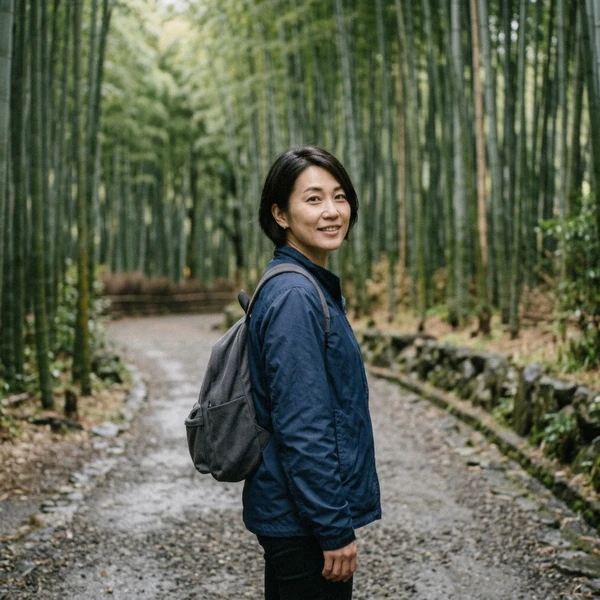
Togetsukyo Bridge is 155 metres of pavement over the Katsura River, it costs nothing, and it is where most people in Arashiyama end up standing at some point in the day without quite deciding to. Its name means Moon Crossing Bridge, from a thirteenth-century emperor watching the moon appear to travel along it. Cross it and you reach the monkey park; stay on the north bank and you are minutes from the Arashiyama Bamboo Forest. At sunset it is the best free photograph in western Kyoto.
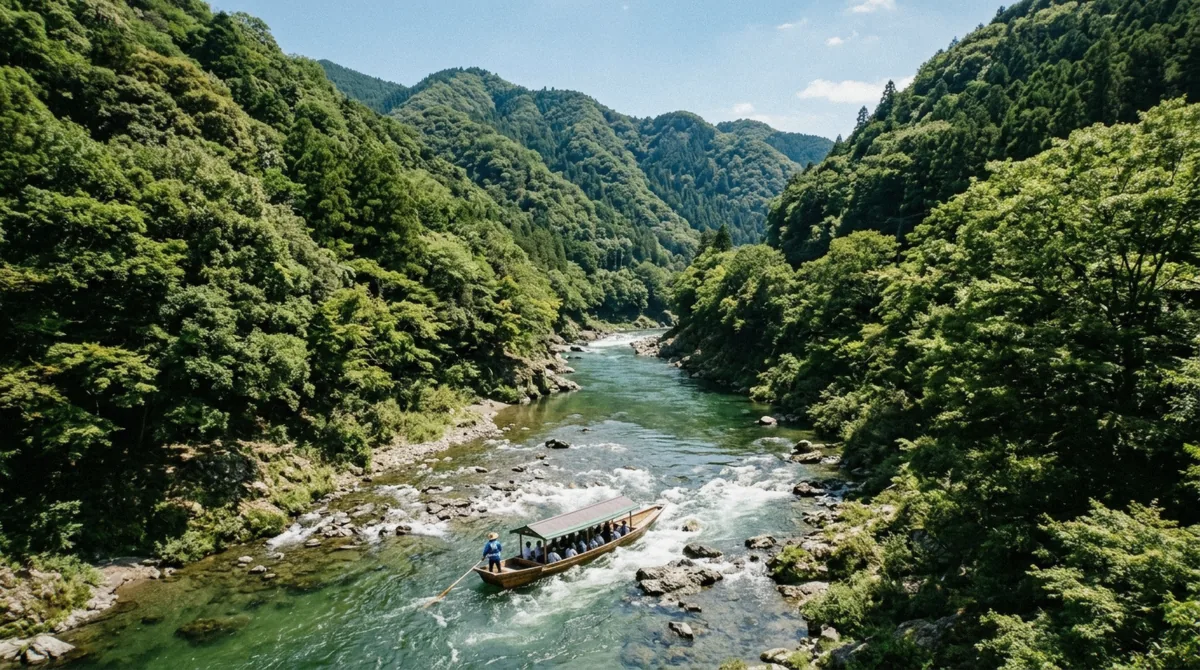
The river the bridge crosses, upstream of Arashiyama, where it is called the Hozugawa.
Quick answer
Togetsukyo Bridge is free to cross and open at all hours. It runs 155 metres over the Katsura River at the heart of Arashiyama, with the shopping street, the Randen station and the bamboo grove on the north bank and the Iwatayama Monkey Park about five minutes away on the south. A bridge has stood here since the Heian period; the current one was rebuilt in the 1930s in concrete with wooden railings. Sunset from the north bank is the shot.
Key takeaways
- Free, no gate, open at all hours, and it carries road traffic.
- 155 metres long, named Moon Crossing Bridge after Emperor Kameyama's remark.
- North bank: shopping street, Randen station, bamboo grove.
- South bank: Iwatayama Monkey Park, about 5 minutes on foot.
- Hozugawa river boats land beside it after their 16 kilometre run.
- Mid-November is peak, when the hillside behind turns and both banks fill.
Walks That Cross It
Every guided walk in the district touches the bridge, because it is the only crossing. These three build it into the route rather than passing it.
 from $64
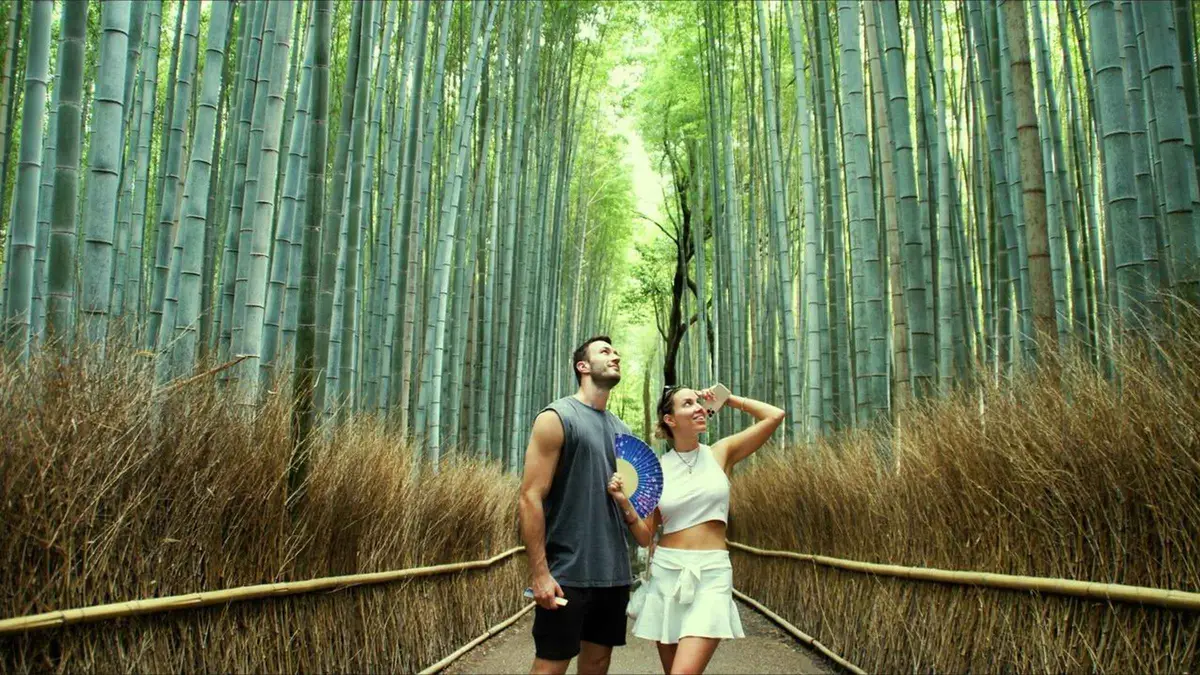
Most Included — Temple, Matcha & Monkeys
from $64
Most Included — Temple, Matcha & Monkeys Arashiyama Bamboo Grove, Tenryu-ji, Matcha and the Monkey Park
Traveling Tokyo's four-hour loop, and the one that packs the most paid entries into a single ticket: Tenryu-ji, a cup of Uji matcha and the monkey park are…
- Tenryu-ji entry, one Uji matcha drink and monkey park admission all included
- 45 minutes inside the bamboo grove, the longest stop of any tour here
- Nonomiya Shrine and Togetsukyo Bridge on the same loop
- Meets at Tully's Coffee, Randen Arashiyama Station
 from $70
Kimono Forest Included — 5.0★
from $70
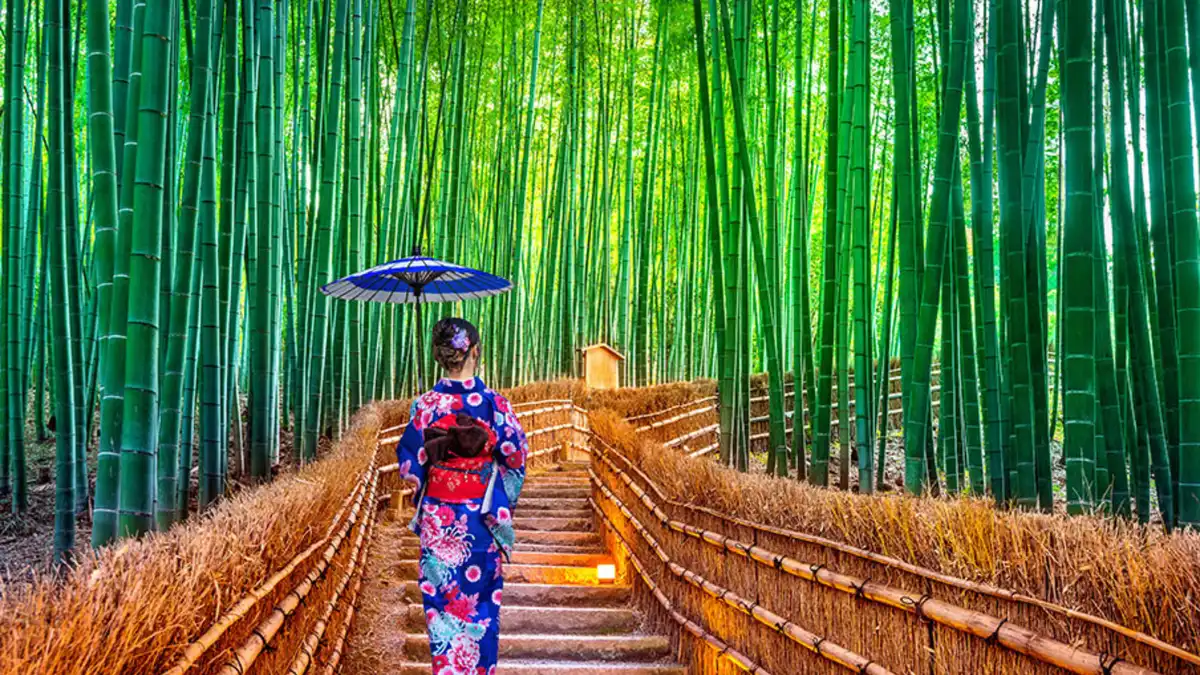
Kimono Forest Included — 5.0★ Arashiyama Walking Tour: Bamboo Grove, Kimono Forest and Monkey Park
A newer, shorter three-hour walk with a perfect score from its first handful of travellers. It is the only tour here that builds the Kimono Forest, the 600-plus…
- Only tour here that walks the Kimono Forest's 600 illuminated pillars
- Three hours, the shortest full circuit of the district
- Morning (9:30) or afternoon (13:00) departure
- Bamboo grove, Tenryu-ji garden, Togetsukyo Bridge, Iwatayama Monkey Park
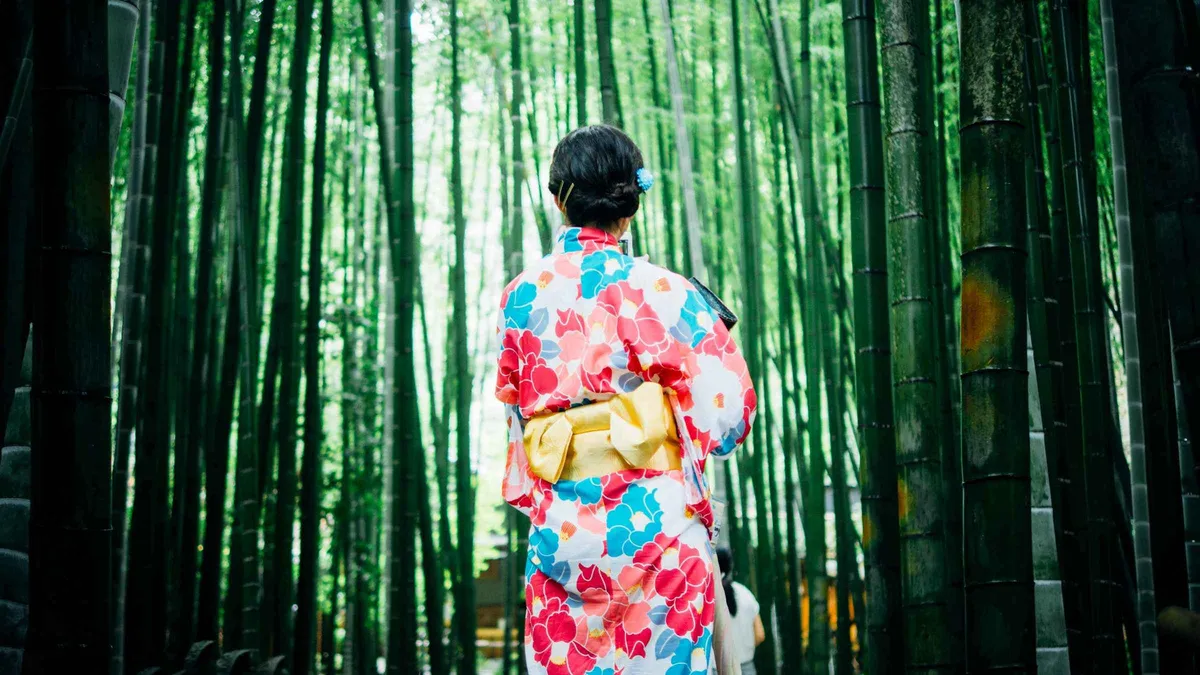 from $57
Earliest Start — Empty Path
from $57
Earliest Start — Empty Path Arashiyama Early Access: Bamboo Path, Tenryu-ji and Togetsukyo Before the Crowds
The shortest and earliest option: two and a half hours built around one idea, standing on the bamboo path while it is still close to empty. It opens…
- Built around the quiet window before the coaches arrive
- Tenryu-ji garden admission included
- 2.5 hours, which leaves the rest of the day free
- Photo coaching at each stop
The Facts, and the Name
Checked in August 2026.
There is nothing to buy here, which makes the bridge the easiest recommendation in Arashiyama.
| Detail | |
|---|---|
| Cost | Free, no ticket, no gate |
| Length | About 155 metres |
| Crosses | The Katsura River, called the Hozugawa upstream |
| First bridge here | Heian period, ninth century |
| Current structure | Rebuilt in the 1930s, concrete with wooden railings |
| Best time | Sunset from the north bank, looking south-west |
| Busiest | Mid-November, all day |
Why it is called Moon Crossing Bridge
Togetsukyo translates as the bridge of the crossing moon. The name is credited to Emperor Kameyama in the thirteenth century, who watched the moon travel along the line of the bridge from the north bank and said it looked as though it were crossing.
That is the sort of story that would be marketing anywhere else. Here it is the reason the bridge has kept the same name for seven hundred years through repeated rebuilding, floods and one typhoon that put the approach roads under water in 2013.
Old bridge, modern structure
A crossing has existed on this spot since the Heian period, traditionally dated to the ninth century. What you walk across is much newer: the present bridge went up in the 1930s in reinforced concrete, with wooden railings and a deliberately traditional profile so that it reads as an old bridge from a distance and at a photograph's resolution.
It also carries cars. The pavement is narrow, the traffic is constant, and in November the combination of vehicles and standing photographers makes the crossing slow. That is the one honest complaint about the place.
What Sits on Each Bank
The bridge is the hinge of a day here, and knowing which side holds what saves an hour of doubling back.
| Bank | What is there | Walking time |
|---|---|---|
| North | Bamboo grove, Tenryu-ji, Okochi-Sanso | 10 to 15 minutes |
| North | Shopping street, restaurants, Randen station and the Kimono Forest | 2 to 8 minutes |
| South | Iwatayama Monkey Park entrance | About 5 minutes |
| South | Hankyu Arashiyama station, for Osaka | About 7 minutes |
| At the bridge | Hozugawa boat landing, rickshaw stands, riverbank benches | On the spot |
The riverbank, which nobody plans for
The bank upstream of the bridge on the north side is where Arashiyama stops being crowded. There are benches, a wide gravel shore, pleasure boats for hire in the warm months, and a view straight up the gorge toward the mountains the river boats come down. Families throw stones for an hour here while everyone else queues in the bamboo.
In spring the far bank carries cherry trees, in November the whole hillside behind turns, and in January it is empty and cold and the mountains hold snow. It is free at every point in that cycle.
Photographing It
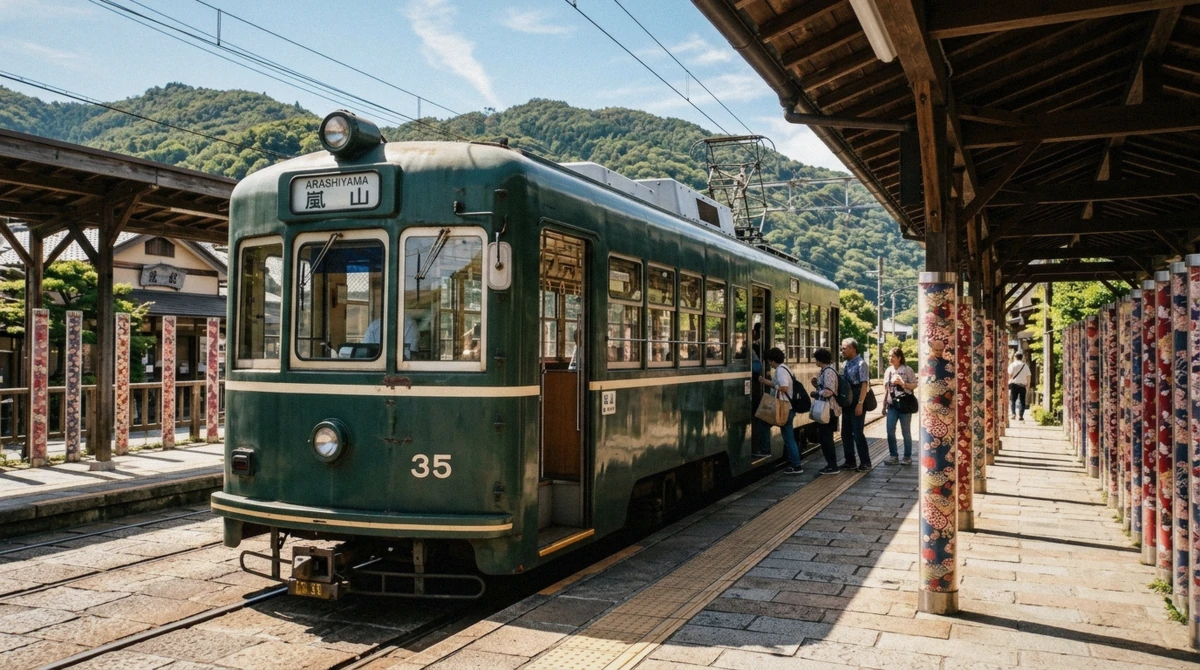
The north bank end of the walk: the tram terminus, five minutes from the bridge.
Stand on the north bank downstream of the bridge and shoot south-west in the last thirty minutes of light. You get the full 155 metre span, the river carrying the colour of the sky, and the Arashiyama hills stacked behind. It is the one frame in this district that works better with people on it than without, because the scale needs them.
Midday is the worst time: flat light, traffic on the deck, and the hills washed out. If midday is what you have, walk up the riverbank instead and shoot the gorge rather than the bridge. Our photo spots guide sets out the eight frames worth the walk and which hour each one needs.
Boats, rickshaws and what moves under it
The water below the bridge is busier than the road above it. Hozugawa boats land here after two hours and 16 kilometres from Kameoka. Small hire boats work the calm water upstream in summer. Rickshaws wait at the north end, and their drivers run the private lane inside the bamboo grove that walkers are not allowed on.
All of it is free to watch, which is more than can be said for most of Kyoto's set pieces.
The Bridge and Both Banks
One crossing, two halves of the district. Everything below is within fifteen minutes.
Questions About the Bridge
Why is the Togetsukyo Bridge famous?
For the name and the setting. Emperor Kameyama is credited with calling it the Moon Crossing Bridge in the thirteenth century after watching the moon appear to travel along it, and the 155 metre span sits directly in front of the Arashiyama hills, which makes it the postcard view of the whole district.
Is the Togetsukyo bridge free?
Yes. It is a public road bridge with no ticket and no gate, walkable at any hour. Almost everything at the bridge is free, including the riverbank, the boat-watching and the view. The full district cost breakdown covers what is not.
Is Togetsukyo Bridge worth visiting?
You will cross it anyway, because it is the only link between the bamboo grove and the monkey park. Worth planning for is the timing: stand on the north bank at sunset and it earns its reputation. At noon in July it is a busy road bridge with a nice backdrop.
How long is Togetsukyo Bridge?
About 155 metres. The present structure dates from the 1930s and is reinforced concrete with wooden railings, built to look like its predecessors. A bridge has stood on this site since the Heian period, and this one has survived typhoon flooding that closed the approach roads.
What is on the other side of the bridge?
The south bank leads to the Iwatayama Monkey Park entrance, about five minutes' walk along the river, and to Hankyu Arashiyama station for trains to Osaka. The north bank has the shopping street, the restaurants, the Randen terminus with its Kimono Forest, and the route to the bamboo grove.
When is the best time to see it?
Sunset, from the north bank, looking south-west. Mid-November puts autumn colour on the hills behind it and brings the heaviest crowds of the year. Early morning is quiet and the light is behind you, which flattens the hills, so it is the walk rather than the photograph that improves.
Do the river boats land at the bridge?
They do. The Hozugawa boats finish their two-hour run from Kameoka beside the bridge, which is why you will see wooden boats being poled in while you are standing on it. Small hire boats also work the calm water upstream in the warmer months.