 Arashiyama Bamboo Forest
Arashiyama Monkey Park: What the ¥800 and the Climb Actually Buy
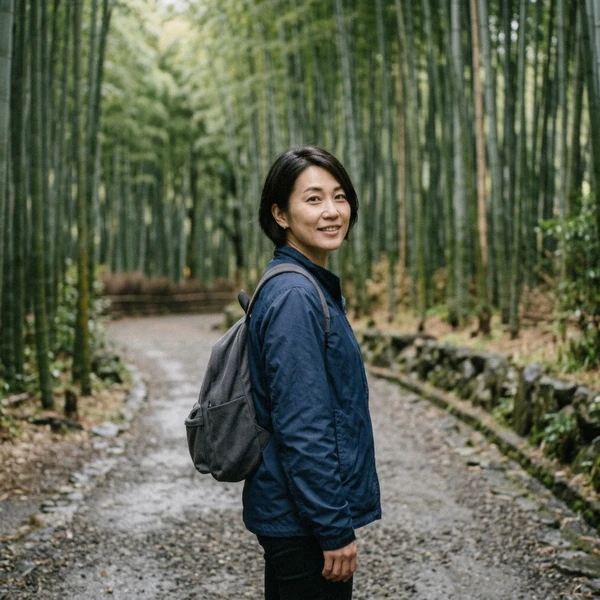
Half the people who ask me about Arashiyama Monkey Park think it is a zoo at the bottom of a hill. It is a mountain with a troop living on it, and the ticket only gets you to the start of a 1.45 kilometre climb. Nobody sells this ticket online, which is the first thing worth knowing, and the second is that the gate takes cash in yen and nothing else. What you get at the top is a bald clearing 160 metres above the Katsura River with more than 120 wild Japanese macaques wandering through it and the whole of Kyoto laid out behind them. Four of the guided walks through the Arashiyama Bamboo Forest include this ticket in the price.
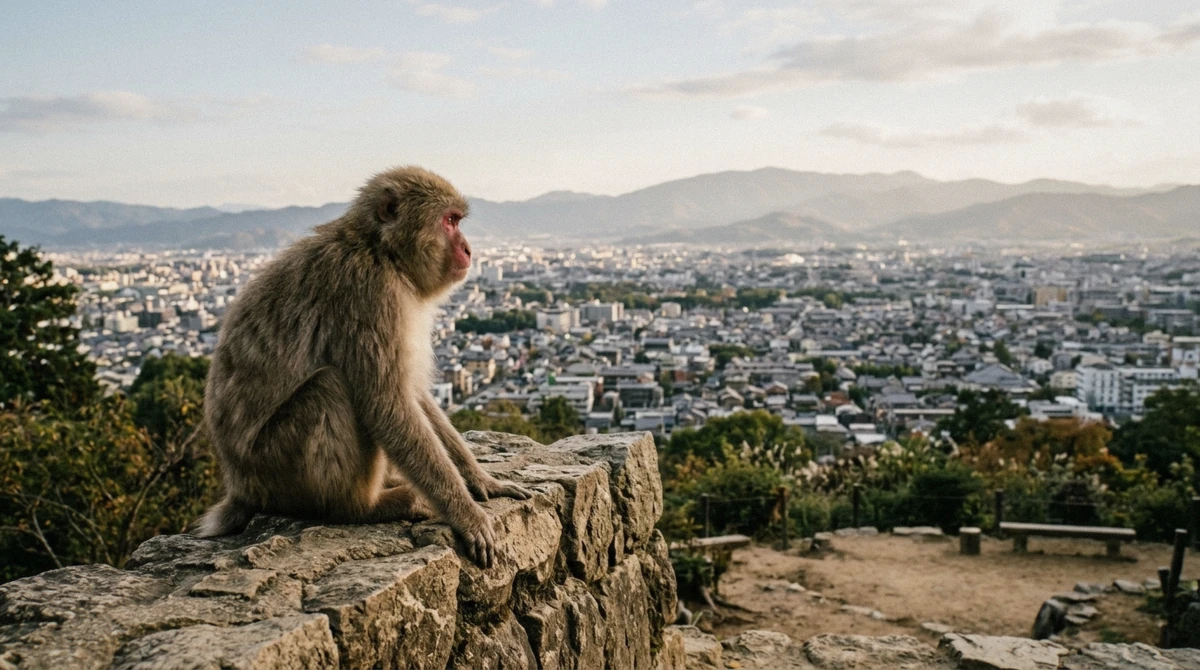
The hilltop clearing, 160 metres above the river. The macaques come and go; the view does not.
Quick answer
Arashiyama Monkey Park charges ¥800 for anyone over 16 and ¥400 for children aged 4 to 15, in cash, at the gate. It opens at 9:00 and the official closing time is 16:00, sometimes earlier when the troop heads back up the mountain. Getting to the monkeys means a 1.45 kilometre walk with 160 metres of climbing, which takes most people 15 to 20 minutes. Allow around 90 minutes for the whole visit.
Key takeaways
- ¥800 adults, ¥400 children 4 to 15, free under 3. Cash in yen only, no cards.
- No online tickets exist. A guided walk that includes entry is the only way to prepay, from $51.
- The climb is 1.45 km and 160 metres up, on a stepped dirt path. Not for strollers.
- Over 120 wild macaques. You feed them from inside the hut, never outside it.
- Enter within 30 minutes of buying your ticket, or it stops being valid.
- Closed on 1 January, in bad weather, and on irregular holidays with no notice.
Walks That Include the Monkey Park Ticket
Four of the guided walks we track finish at Iwatayama with the ¥800 admission already paid. Since the park sells no tickets online, this is the only way to have it booked before you arrive in Kyoto.
 from $86
Most Booked — 4.86★, 938 Reviews
from $86
Most Booked — 4.86★, 938 Reviews Arashiyama Bamboo, Temple and Okochi-Sanso Walk — with Monkey Park or Sake Brewery
The most-reviewed guided walk on this page, run by Japan Tour Adventure. It is the only one that includes the ¥1,000 Okochi-Sanso Garden ticket, and after the grove…
- Okochi-Sanso Garden entry included: the ¥1,000 villa at the top of the grove
- Tenryu-ji and Iwatayama Monkey Park tickets included (Option A)
- Option B swaps the monkeys for a local lunch and Tanzan Brewery sake tasting
- Group or private booking at different rates
 from $64
Most Included — Temple, Matcha & Monkeys
from $64
Most Included — Temple, Matcha & Monkeys Arashiyama Bamboo Grove, Tenryu-ji, Matcha and the Monkey Park
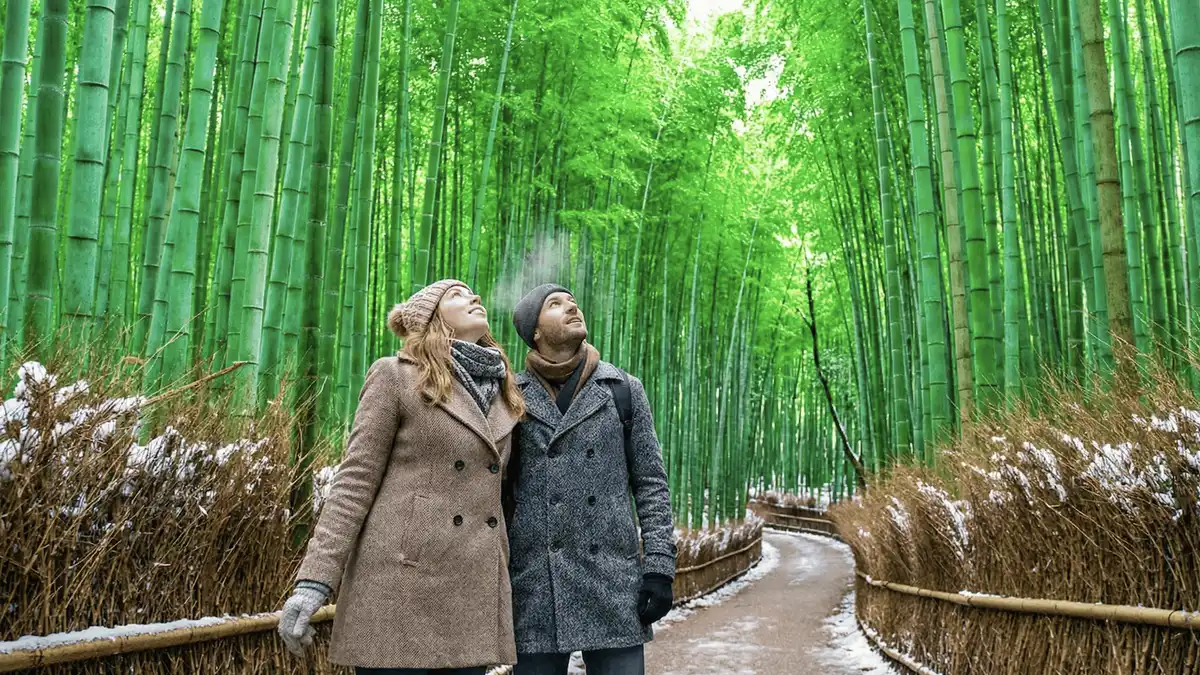
Traveling Tokyo's four-hour loop, and the one that packs the most paid entries into a single ticket: Tenryu-ji, a cup of Uji matcha and the monkey park are…
- Tenryu-ji entry, one Uji matcha drink and monkey park admission all included
- 45 minutes inside the bamboo grove, the longest stop of any tour here
- Nonomiya Shrine and Togetsukyo Bridge on the same loop
- Meets at Tully's Coffee, Randen Arashiyama Station
 from $51
Lowest Price — 4.89★
from $51
Lowest Price — 4.89★ Arashiyama Unveiled — Bamboo Grove, Tenryu-ji, Matcha and Macaques
The cheapest guided version of the classic Arashiyama circuit, and the highest-rated of the four-hour walks. Same spine as the tours above (Tenryu-ji's Zen garden, the bamboo path…
- Cheapest guided walk here that still includes Tenryu-ji and the monkey park
- One matcha drink included
- Small groups that often turn out to be near-private
- Tenryu-ji Zen garden, bamboo path, Nonomiya Shrine, Togetsukyo Bridge
 from $70
Kimono Forest Included — 5.0★
from $70
Kimono Forest Included — 5.0★ Arashiyama Walking Tour: Bamboo Grove, Kimono Forest and Monkey Park
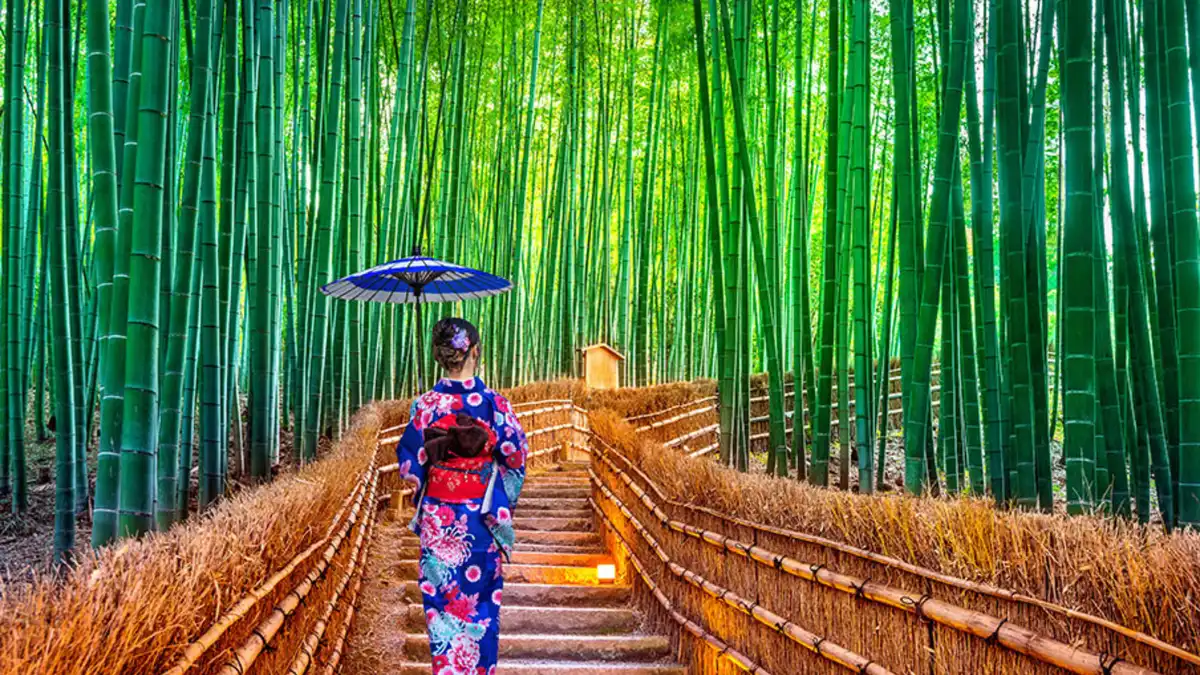
A newer, shorter three-hour walk with a perfect score from its first handful of travellers. It is the only tour here that builds the Kimono Forest, the 600-plus…
- Only tour here that walks the Kimono Forest's 600 illuminated pillars
- Three hours, the shortest full circuit of the district
- Morning (9:30) or afternoon (13:00) departure
- Bamboo grove, Tenryu-ji garden, Togetsukyo Bridge, Iwatayama Monkey Park
Everything You Need Before You Climb
Checked against the park's own information in August 2026. Yen prices convert at ¥157 to the dollar, the rate on 3 August 2026.
What the park actually is
Iwatayama Monkey Park is a commercial park on Mount Iwata, on the south bank of the river opposite the main Arashiyama shopping street. The troop of Japanese macaques that lives there is wild. Nothing is caged, nothing is fenced, and no one herds the animals into position for photographs. They stay near the summit clearing because staff put out corn and wheat five times a day, every two hours from 9:30, and that food supply is the entire reason the park works.
The animals are Macaca fuscata, the same species as the famous snow monkeys of Nagano. What Arashiyama does not have is the hot spring. If you came looking for macaques sitting in steaming water in the snow, that is Jigokudani, four hours away by train.
Fees, hours and the cash-only gate
The gate takes Japanese yen in cash. No cards, no IC cards, no foreign currency. No online booking exists for this park, and there is no timed entry and no reservation system, so on a busy November Saturday you queue like everyone else. One rule catches people out: your ticket has to be used within 30 minutes of purchase, so do not buy it and then wander off for lunch.
The park's own English page gives the hours as 9:00 to 16:00 and notes that it may close early when the monkeys go back up the mountain. Several travel directories still print 9:00 to 16:30 for the summer half of the year. We follow the park: plan around a 16:00 close and treat anything later as a bonus.
| Price | Notes | |
|---|---|---|
| Adults (16 and over) | ¥800 (about $5.10) | Cash in yen at the gate |
| Children 4 to 15 | ¥400 (about $2.55) | Cash only, same gate |
| Under 3 | Free | Carried, not in a stroller |
| Opening hours | 9:00 to 16:00 | May close early when the troop leaves |
| Closed | 1 January, bad weather | Plus irregular holidays with no notice |
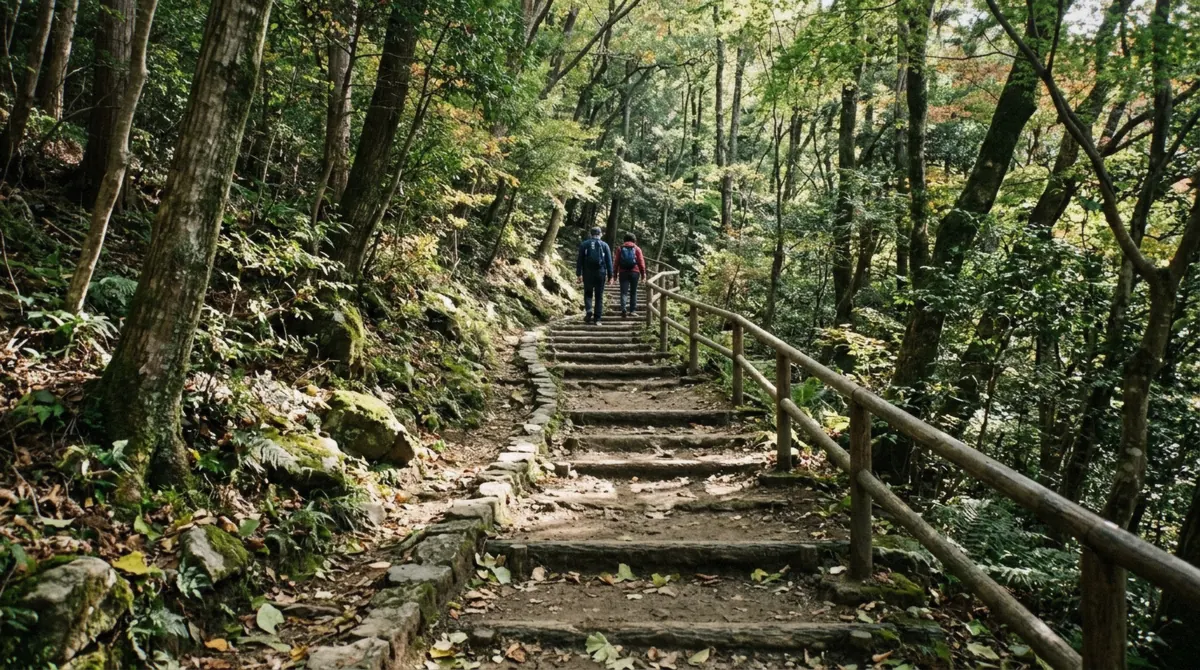
The path up. Shade most of the way, and steps in the steeper sections.
The climb, honestly
From the gate to the summit clearing is about 1.45 kilometres with 160 metres of elevation gain. Most people take 15 to 20 minutes; if you stop at the benches it is closer to 30. The path is packed dirt with stepped sections, wide enough for two, shaded almost the whole way, and there is a small viewpoint partway where nearly everyone pauses.
It is not a hike in any technical sense, and it is also not flat. In July and August, with Kyoto sitting above 33°C and the humidity where it usually is, this climb defeats people who walk five kilometres a day at home. Guides on the summer tours sometimes hand over the tickets at the gate and let guests go up at their own pace rather than lead the climb twice in one afternoon.
The feeding hut, and the rules that matter
At the top there is a hut with wire mesh over the openings. The mesh is there for you, not for the monkeys: you go inside, buy a bag of apple pieces or peanuts, and pass food out through the wire. Feeding anywhere else in the park is banned, and so is bringing food up from town.
The rest of the rules come off the park's own list and are short enough to memorise: do not touch the monkeys, do not stare into their eyes, keep your distance outside the hut, no pets even inside a carrier, no smoking, no drones. Bags with food visible in them get attention you do not want. Nothing here is theatrical; these are wild animals that have simply decided people are not worth fleeing from.
- Feed only from inside the hut, only with food bought there
- Do not touch and do not make eye contact
- No pets, even carried in a pet carrier
- No smoking anywhere in the park
- Drones are prohibited
- Keep food and snacks out of sight on the climb
Is it ethical, and is it worth it
Both questions come up constantly, and they are the same question. The macaques are free to leave and regularly do; the troop is provisioned rather than captive, and the feeding happens through a barrier that separates people from animals instead of putting them in contact. Compared with places that pose animals for photographs, this sits at the honest end of the scale. It is still a commercial operation built on feeding wild animals, and if that is a line you do not cross, this is not your afternoon.
On worth: the reviews split cleanly. People who expected a petting experience feel short-changed, because you cannot touch anything and the monkeys ignore you. People who came for the view and the strangeness of sharing a clearing with a wild troop rate it highly. The panorama over Kyoto from the top is genuinely the best in the district and would be worth the climb with no monkeys at all.
When to go, and when not to
First thing, when the gate opens at 9:00, gives you the coolest climb and a troop that is hungry and close to the hut. Late afternoon is a gamble: the monkeys drift back up the mountain and the park closes early when they do. Rain makes the path slick and the animals scarce, and the park closes outright in genuinely bad weather without much warning.
Autumn is the best of it. The maples on the climb turn through November, the air is cool enough to enjoy the walk, and the view from the top runs clear to the eastern hills. Winter mornings are quiet and cold and the monkeys sit in the sun in a huddle, which is the picture most people actually want.
| Time of year | The climb | The monkeys |
|---|---|---|
| March to May | Comfortable, 11 to 25°C | Active, infants born in spring |
| June to August | Hard work, humid, up to 34°C | Sluggish, shade-seeking at midday |
| September to November | The best window | Active, autumn colour on the path |
| December to February | Cold and clear, quiet | Huddled in the sun, easy to watch |
With kids, with luggage, with bad knees
Children who can walk the climb love this place more than any temple in Kyoto, and the mesh hut solves the safety problem that would otherwise make it impossible. Under-3s go free but have to be carried; strollers cannot be pushed up the path and there is nowhere secure to leave one at the gate.
There is no lift, no shuttle and no accessible route to the summit, so anyone who cannot manage 160 metres of climbing on steps should skip it rather than start it. There is also no car park at the park itself; drivers use the paid lots along the river. Coin lockers sit at both JR Saga-Arashiyama and Randen Arashiyama stations, which is where the suitcase goes.
Finding the entrance, and fitting it around the bamboo
The entrance is easy to walk past. Cross Togetsukyo Bridge to the south bank, turn along the river for about 20 metres, follow the signs toward Ichitani Munakata Shrine, and the gate is on the left beside the shrine steps. On foot it is 7 minutes from Hankyu Arashiyama Station, 10 from Randen Arashiyama, 15 from JR Saga-Arashiyama, and 5 from the Arashiyama Koen bus stop.
The order that works: the bamboo grove and Tenryu-ji first thing while the path is empty, then the bridge, then the climb around 11:00 when the grove has filled up and the park has not. The full address is 61 Nakao Shita-cho, Arashiyama, Nishikyo-ku, Kyoto 616-0004, and the park's telephone is 075-872-0950 if you want to check the weather closure before you cross the river.
Where the Gate Is
The entrance sits on the south bank, past the bridge and beside Ichitani Munakata Shrine. Everything else here is within a fifteen minute walk.
Questions People Ask at the Bridge
Is it worth going to Arashiyama Monkey Park?
If you are fit enough for the climb and you want the best view in Arashiyama, yes. The ¥800 buys a wild troop going about its business a couple of metres away and a panorama over Kyoto that no temple in the district offers. If you were hoping to hold a monkey, or you cannot face 160 metres of uphill in the heat, spend the money on Okochi-Sanso Villa instead and keep the afternoon flat.
How hard is the walk to Arashiyama Monkey Park?
It is 1.45 kilometres with 160 metres of climbing on a shaded dirt path with stepped sections, which takes 15 to 20 minutes at a steady pace. Fit walkers find it easy in spring and autumn. In July and August the heat and humidity turn it into real work, and there is no shuttle, lift or alternative route to the top.
How long do I need at Arashiyama Monkey Park?
About 90 minutes door to door: 20 minutes up, 30 to 40 at the top with the feeding hut and the view, and 15 back down. Photographers stay longer. If you are trying to fit the park, the bamboo grove and Tenryu-ji into one morning, start at the grove by 8:00 and reach the monkey park gate around 11:00.
Are the monkeys in Arashiyama snow monkeys?
They are the same species, Macaca fuscata, the Japanese macaque. What Arashiyama does not have is the hot spring the Nagano animals bathe in, so you will not see the famous steaming-onsen picture here. What you get instead is more than 120 of them on an open hilltop with Kyoto behind them, four hours closer to the city.
Can you buy Arashiyama Monkey Park tickets online?
No. The park sells at the gate only, in yen, in cash, with no timed entry and no reservation. The only way to have entry paid before you arrive is to book a guided walk that includes the ticket, which four of the walks on this site do.
What happens if it rains?
Light rain is fine, though the path gets slippery and the monkeys spend more time in the trees. In genuinely bad weather the park closes, and it does so without notice, so ring 075-872-0950 before you cross the bridge on a doubtful morning. There are no refunds to arrange since you pay at the gate.
Can you take a stroller or a suitcase up?
Neither. The path has steps and no stroller can be pushed up it, and there is nowhere at the gate to leave one. Use the coin lockers at JR Saga-Arashiyama or Randen Arashiyama station. Children under 3 go free but have to be carried the whole way.